

By. Alli Parrett
How often are you in pain? my doctor asked.
I had let it go for too long. That feeling in my gut that something was up with my body. I was in the final days of my creative writing dissertation. Most days I spent by myself with the company of my dogs and my work. For months, I sat, hunched over at my desk, in some state of pain. I wore loose-fitting shirts and no bras so my breasts wouldn’t bear the brunt of pain more than they already had. Even in the middle of summer, I wore a hoodie, always feeling cold. Some days I didn’t write at all. When I did, stories seemed to mesh with my own life. Was I writing the characters thoughts or my own? The lines between fact and fiction seemed non-existent. Suddenly, my words were armed with danger I couldn’t identify.
Three weeks out of the month, I said.
And how long has this been going on?
I said six months.
It wasn’t a lie but in truth it had probably been a lot longer.
During my teen years, I missed an average of two school days a month due to menstrual-induced vomiting, migraines, or both. On days I made it to class, cramps made me double-over but I still did my algebra problems and participated in gym class. Menstrual cramps weren’t a good enough reason to sit out but if a dude got hit in the nuts with sporting equipment, he could sit in the nurse’s office and ice his junk for the rest of class.
Relief came at sixteen— thank fuck for Depo-Provera. Goodbye cramps. Goodbye migraines. Goodbye vomiting. Goodbye period. As far as I was concerned, this was the key to overthrowing the patriarchy. I didn’t have to deal with my period or potential for unplanned pregnancies— more time to take down The Man.
After eight years of being on Depo, my doctor urged me to consider a different option for birth control. Depo was known for decreasing bone density. I had a history of low calcium and vitamin D, both factors for healthy bones. This was a suggestion I didn’t take lightly, but I didn’t relish the idea of changing my birth control. Depo and I had a good thing going. The thought of taking a pill once a day or shoving a ring up my cooch every three weeks just wasn’t appealing.
In August 2014, I opted for the Mirena IUD. Every woman I knew on Mirena, sang its praises. It lasts for five years and periods are almost non-existent. I asked about PMS symptoms since mine had always been so bad. I was told my body would still experience the hormonal cycle associated with menstruation since Mirena only releases hormones locally. The doctor said my cycles should be much more tolerable.
For a while, it was tolerable. A year later, I drove north on I-5 back to Seattle. It was late after I photographed a wedding in Hood, Oregon. Every part of me was tired and my eyes strained at road signs like they did after I worked at my computer all day. My glasses prescription had shifted a bit year to year. Sometimes I only needed to wear glasses when I felt a headache coming on, other years my optometrist told me to wear them full time.
I got new lenses and directed to wear them full-time without the flexibility of choosing not to wear them if my make-up was on point. The world was a little clearer for a while. In the past, my vision hadn’t shifted quickly. The yearly check-ups were plenty, until suddenly they weren’t.
I was back in the optometrist’s chair eight months later. Lines weren’t as crisp as I was used to. Words on the page were soft and rounded. Screens strained my eyes much faster. Headaches came on faster. My doctor toggled with the lenses in her machine longer than normal.
One or two? Two or three? One or four?
I compared lens after lens.
Two but only slightly better than three. One I think, but I’m not sure I notice a big difference. When she finally landed on my prescription,neither of us felt confident.
Let’s see how you feel after a couple weeks and we’ll recheck if needed.
I hoped that a re-check wouldn’t be needed.
In the weeks following my appointment, me, my husband, and our two dogs were moving to Scotland. He would get his MBA and I would spend the year writing with the goal of getting into a master’s program. I didn’t have time for eye issues. Moreover, finding a doctor that listened and took my concerns seriously was a major feat.
The year in front of me was uncertain— my days went from meetings and bureaucracy to wide open. Free to use however I thought a writer should spend their days. I drafted a reading list and writing schedule. Arbitrary deadlines for my pseudo, self-led, MFA program. Every morning I consulted my homemade syllabus through unhelpful lenses and got to work. I wore my glasses for two months with no relief.
Headaches turned to migraines. Writing and reading caused pain and fatigue. I was meant to produce and consume words. Before, I found peace in them and now I grew anxious about falling behind in my self-imposed schedule. Experiencing a world with fewer words was frightening. A re-check was immanent, new doctor be damned.
I showed the new optometrist my current and past prescriptions. He tested both and confirmed the change in my vision. He didn’t spend much time fiddling with the lenses before deciding my new prescription. I hoped that was a good sign.
I wore the new-new glasses for another couple months with only slight improvements. Writing and reading still made me tired. Migraines were every two weeks instead of weekly. Caffeine and too much acetaminophen kept them manageable.
Meanwhile, my periods were starting to feel like they did when I was a teenager. There were many days in 2018 where I laid on the couch using my dogs as hot water bottles across my stomach, listening to a show play in the background. When I watched the screen, I turned the brightness down. On the days that I felt like myself and remotely creative, I sat at my desk in the corner of our common room and wrote as long as I could, supplied with tea and treats, and (later in the day) whiskey to keep the writing magic going as long as I could. On my off days, I tried to summon the creativity with the same supplies but learned that pain often wins that battle.
Television episodes ticked forward while I calculated what I could’ve written or read during the same time. At least I’m not dealing with this at work, I’d think. Then I’d remind myself that writing was supposed to be my job. Making peace with that guilt manifested itself in unexpected ways. Chores were done sooner than usual. If I couldn’t be a productive writer, I’d be a productive partner. Granted, I wasn’t Martha Stewart. I was more a home-occupier, than I was homemaker.
On the days my eyes and ovaries double-teamed me, nothing got done. Words were not written or read. Dishes were dirtied but not cleaned. Clothes remained heaped in front of the bed. It was on those days I was most thankful for our dogs. Even on the worst days, I found it in myself to take them to the park and watch them enjoy a bit of freedom. Smell whatever smells captivated them and then roll around in it. Run with each other without a care. They weren’t always long visits, but fresh air did me good.
After eight months of pushing my health and writing, I got the letter I was hoping for: acceptance to my graduate program.
That summer was another push. I needed to keep my words sharp. I spent five weeks immersed in writing with experienced mentors and diligent peers. Days were steeped with discussions on form and structure. I spent my nights figuring out how to write all over again. I can only remember one day secluded from the world. I didn’t have time to pay attention to my body. Maybe nothing was wrong. Maybe it was just my environment. I polished the story that would be my first publication and prepared myself for the year ahead.
In September 2018, we moved back to Seattle. We got settled into our home and a new, yet familiar, routine. I started my MA program and began bartending at a local brewery not long after that. My husband started a new job. I had the days to myself again, this time to chip away at a syllabus of someone else’s design.
Any changes to your eyes? My optometrist asked.
At first, I said no. Then, reluctantly, I shared a painful moment from a few weeks prior. My husband and I were out shopping for a couch and looking at fabric samples. Everything looked normal one instant, and in the next there were spots everywhere. The light was distorted. I asked my husband if the lights were flickering and he said no.
Good, just me then.
An ocular migraine. Her voice was plain, matter of fact. Those aren’t fun.
I nodded in agreement. She said nothing else about it and measured me for a new prescription, though it didn’t do much good.
The semester dragged on. I wrote, I read, I rested my eyes when I could. Pain in the rest of my body grew. My chest was weighted down, tender to the touch of even a shirt. My abdomen bloated and sweatpants were the only comfortable option. I looked for solace in my writing, but just as my professors promised, all I found was conflict. The bar where I worked was empty. Music echoed against stacked barrels and fermentation tanks. I stood alone behind the bar, trying to distract myself with the internet. Nothing. It all felt cavernous. In the emptiness I could see what had been weaving itself into my mind all these months. I summoned some nerve to text my husband something wasn’t right. Except I didn’t really say what was wrong. I didn’t want to say I was depressed. I was, but even though I was ready to talk about what was wrong, I couldn’t bring myself to use the right, concise, accurate word. Instead I said that I wasn’t happy. That it was nothing he did but I wasn’t sure what was going on with me. A text that read more like “it’s not you, it’s me,” rather than “help, I don’t feel like myself and I need you.” And as awkward as that was to work through, I was grateful for my miscommunication. We both looked at what factors might be a play and got to questioning. I told him I was happy with my life, with our lives, and where we were headed. My Maslow’s hierarchy of needs were met but I felt shitty and tired. The only thing that felt like an obvious problem was my birth control.
I don’t know why it felt obvious but I’m calling it my ovarian instinct from now on.
I sat in the waiting room. Sat is the nice word. I curled into myself. Hugged my knees to my chest even though my mother would’ve told me not to as a child when we were sitting on public furniture. I was acutely aware that my feet were on a surface that other people sat on, but it felt more dignified than laying in the fetal position on the floor. The last time I remembered feeling this depressed was middle school when I first got my period. When all of my hormones were revolting.
The nurse handed me a short survey. No more than ten questions, but when my doctor examined them, she said my answers were telling. I was indeed in a depressive episode. I told her that I was concerned it was caused by my birth control.
Any unusual symptoms occur in the last six months?
I tell her about the ocular migraine. My doctor nodded. Yes, we find that women who shouldn’t have extra estrogen in their bodies sometimes get ocular migraines.
An answer.
Also not a side-effect I remember ever discussing with her over the years.
She agreed that I should change birth control.
I want to go back on Depo-Provera, I told her.
She warned me of the bone density risks.
She also warned me that many women experience similar symptoms on Depo that I was experiencing now. Those were future Alli problems. I waved away her warnings and reminded her that I had done well on it for so long in the past.
She prepped my injection. You know, it’s surprising that you had such a bad reaction to Mirena. So many women do well on it.
Is it though?
She looked confused.
I reminded her of my history of having reactions to medications that are opposite of the listed side-effects. Why would this be any different?
Well paradoxical reactions haven’t been widely studied so we can’t say for sure that’s what’s at play here. She stuck the needle in my ass and I went home and waited to feel better.
Within a week, my stomach unknotted. Bleeding stopped. My brain felt less hazy. I could wear bras and they fit. I was getting me back. It wasn’t until I started to feel good again that I realized how bad I had felt that bad for so long.
With tired eyes and mending body, I pressed submit on my dissertation. I gifted myself rest for a few days but to be honest, after finishing a monumental project, I could feel the momentum wasting away. I put my tired eyes to task and started editing other unfinished stories.
I assumed my worsening vision was just part of getting older and my unfortunate paternal ocular genetics settling into my optic nerve. I scheduled my exam without expectations of any improvements, only adjustments.
Anymore ocular migraines? my optometrist asked.
Interestingly, no, I said.
Why interesting? She asked as she fiddled with her exam machine.
I told her about my depressive episode and changing my birth control and that my doctor diagnosed my birth control as the culprit because of the ocular migraine.
She put her machine against my face. We ran through combinations of lenses.
One or two?
Two.
Two or three?
Three.
Three or four?
Three.
She tested a couple more combinations.
You’re testing very consistent, she said with some surprise in her voice. She sounded almost flummoxed.
Very consistent but also very different from your previous prescription. She shook her head while she wrote copious notes in my file. Come to think of it, patients that are pregnant or nursing often have changes in their vision.
My optometrist left the room and I laughed a quiet but frustrated laugh. A birth control option was offered with such nonchalance that the weight of any consequences couldn’t be measured until the wreckage became aftermath.
A week later I sat in the optometrist’s office and saw myself clearly for the first time in four years.
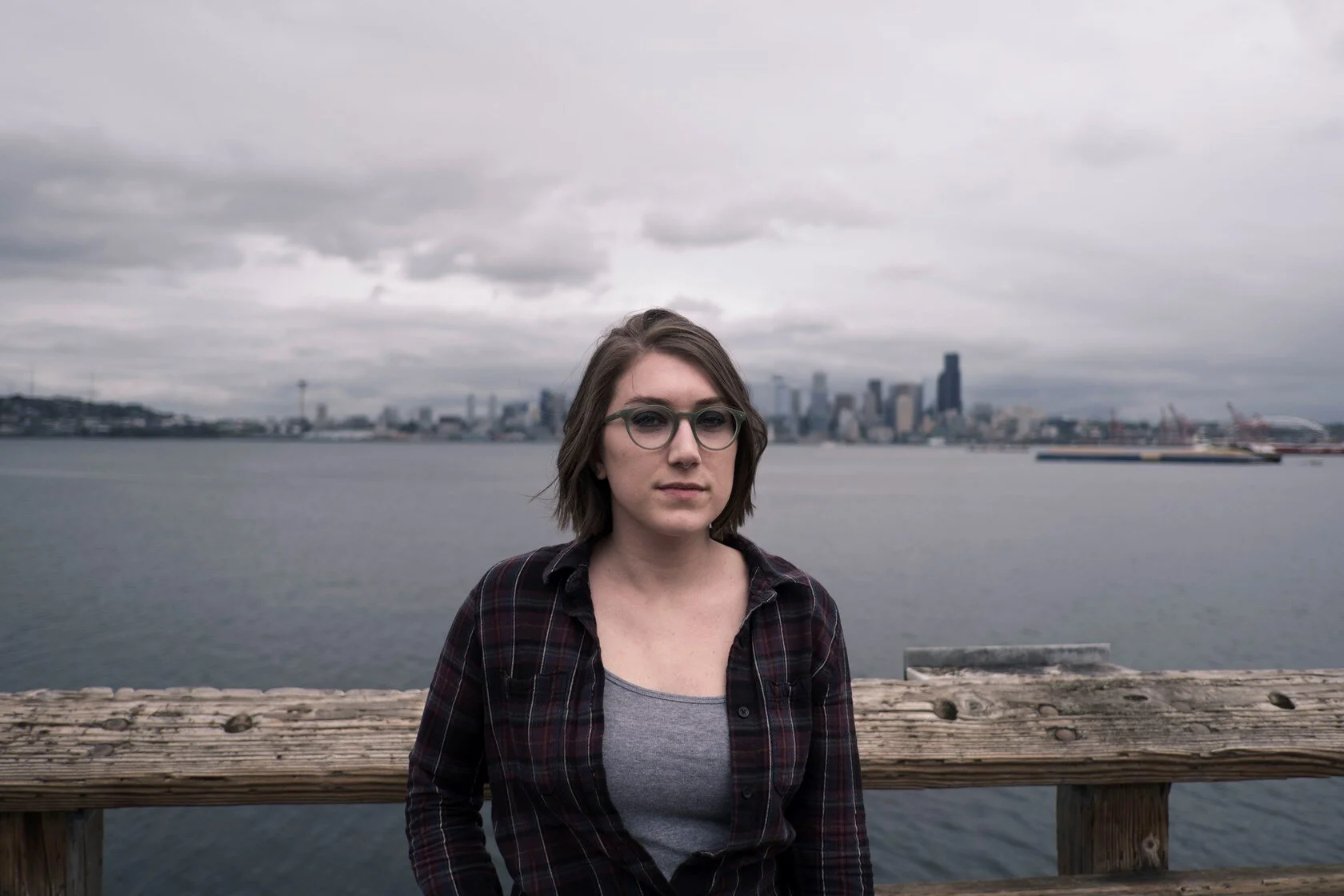
Alli is a prose writer and recently completed the Creative Writing MA program at University of Glasgow. Ali has spent much of adult life in the Pacific Northwest and Scotland. Ali lives in Seattle with her husband and two dogs. Her work was featured in Issue 42 and Issue 43 of From Glasgow to Saturn.